
01
Quantum nonlocality
What makes quantum correlations different?
Symmetry and polyhedral optimization help turn multipartite Bell inequalities into noise-robust, experimentally feasible tests of correlations beyond classical physics.

THEORETICAL PHYSICIST · LEIDEN UNIVERSITY
Understand control and optimize
quantum systems
Exploring the correlations, dynamics, and thermodynamic limits that make the quantum world different.
01 / RESEARCH
From the limits of classical correlations to faster thermalization and more efficient control, I study what quantum systems can do, and how to make them do it.
What makes quantum correlations different?
Symmetry and polyhedral optimization help turn multipartite Bell inequalities into noise-robust, experimentally feasible tests of correlations beyond classical physics.
How quickly can a quantum system relax?
By shaping dissipation and optimizing Lindbladian spectral gaps, I develop ways to prepare thermal states faster. Tensor networks make these questions accessible beyond small systems.
How much does it cost to go faster?
Geometric methods identify low-dissipation control protocols, revealing how finite operating time limits the power and efficiency of quantum and Brownian heat engines.
Can thermodynamics improve learning and sampling?
Building on stochastic and finite-time thermodynamics, this direction explores how low-dissipation protocols and optimal control can improve learning and sampling in generative AI, including diffusion models and Transformers.
02 / SELECTED WORKS
Designing the coupling to an environment offers a way to prepare many-body thermal states faster while preserving the target equilibrium state.
Systematic optimization helps identify multipartite Bell tests with stronger quantum violations, supporting the search for experimentally useful nonlocality witnesses.
Optimizing spectral gaps along a preparation path helps reduce the bottlenecks that make adiabatic quantum-state preparation slow.
A geometric bound quantifies the extra energy needed for fast membrane separation and identifies paths that reduce that cost.
03 / ABOUT ME
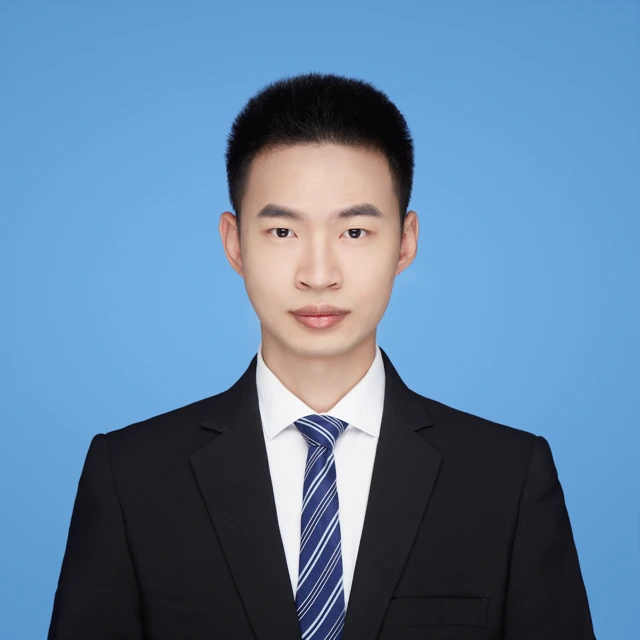
I am a postdoctoral researcher at Leiden University’s Lorentz Institute, working with Jordi Tura. My research connects quantum information, nonequilibrium statistical physics, and optimal control.
My path began with physics and mathematics at Peking University, followed by a Ph.D. at the Beijing Computational Science Research Center and postdoctoral research with H. T. Quan at Peking University.
Academic background & CV04 / PRESENTATIONS